



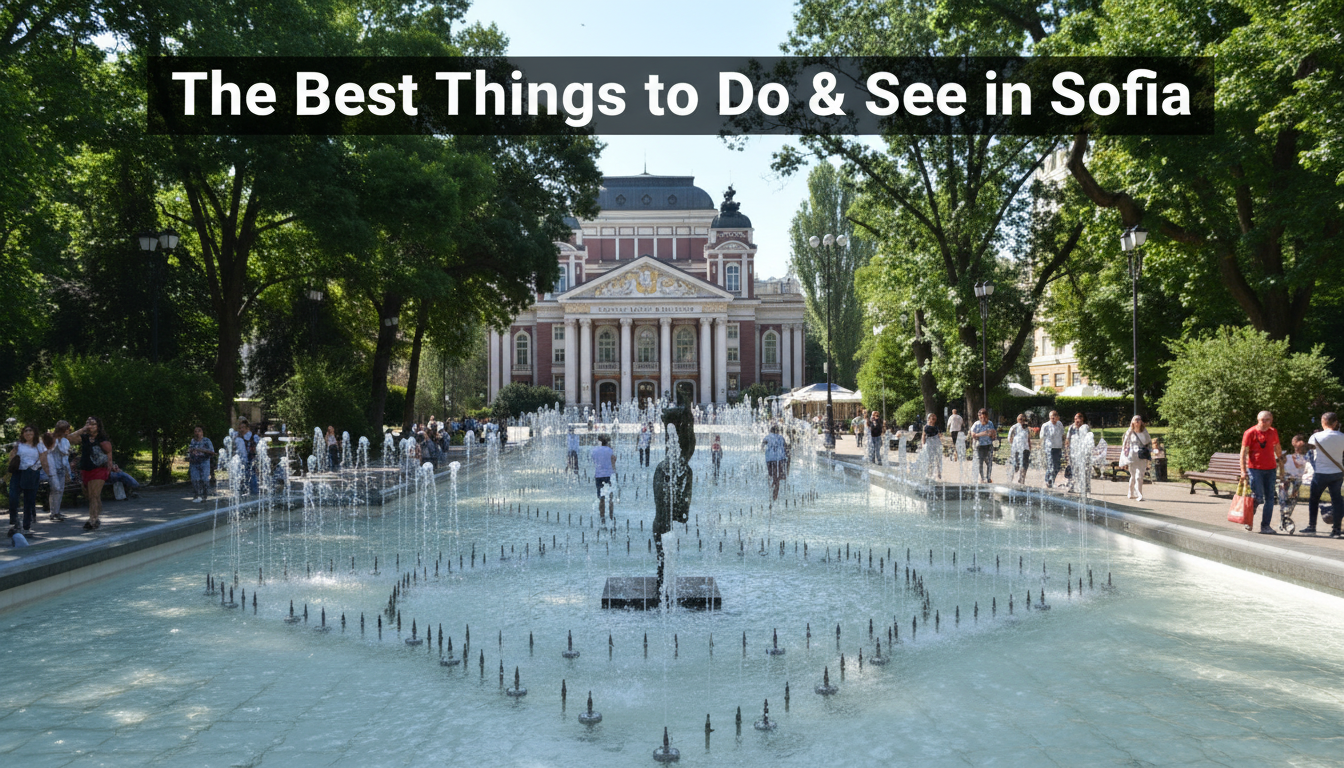
Sofia, the capital of Bulgaria, is a city rich in history, culture, and contemporary appeal. Situated at the base of Mount Vitosha, Sofia merges historical remnants with modern living, creating a vibrant location for tourists. Regardless of whether you’re passionate about history, enjoy nature, or are a culinary enthusiast, Sofia has attractions for all.
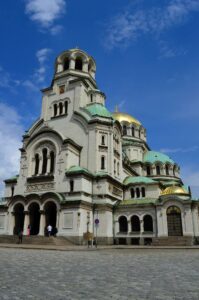
The history of the city goes back thousands of years, with one of its key features being the Alexander Nevsky Cathedral, a remarkable instance of neo-Byzantine design. The ornate murals and golden domes are essential sights for every visitor to Sofia. Close by, you will discover the St. Sofia Church, the source of the city’s name, along with the Roman ruins of Serdica, originating from the Roman Empire. The National Archaeological Museum is another excellent destination for history enthusiasts, highlighting Bulgaria’s rich heritage through ancient artefacts.
For a glimpse of contemporary Sofia, Vitosha Boulevard is the spot to visit. This lively walking street is flanked by cafes, shops, and eateries, providing an ideal mix of shopping and observing passersby. Sofia’s coffee scene is flourishing, so make sure to grab a cup at one of the numerous inviting cafes that adorn the streets.
Nature lovers will appreciate a visit to Mount Vitosha, located a brief drive from the city center. With hiking paths, ski areas, and stunning vistas of Sofia, it’s the ideal getaway for outdoor adventures.
Sofia is famous for its vibrant culinary culture. Local taverns, or mehanas, provide a cozy and genuine experience where you can savor traditional Bulgarian dishes like banitsa (a flaky pastry) and shopska salad.
Sofia, with its distinctive mix of history, culture, nature, and cuisine, is a city that guarantees to enchant all kinds of travelers. In this article, we will give you our list of the best places to do and see when you visit Sofia.
Go to Mount Vitosha in Sophia, Bulgaria
Mount Vitosha, rising above Sofia, Bulgaria, is a natural getaway providing a mix of recreational activities and picturesque landscapes. Located just a short distance from the city center, it provides an easy getaway for residents and tourists alike.
Trekking and Outdoor Discovery
Vitosha is famous for its wide range of hiking paths that cater to different skill levels. The climb to Cherni Vrah (Black Peak), the tallest point of the mountain at 2,290 meters, is a favored path providing expansive views of Sofia and the nearby scenery. Another popular path takes you to Kamen Del, offering some of the most beautiful views of the capital. These paths meander through vibrant woods and expansive fields, highlighting the area’s abundant biodiversity.
Cold Weather Activities
In winter, Vitosha becomes a center for snow sports. The Aleko Ski Center serves as a central hub for skiing and snowboarding lovers, offering well-groomed runs and amenities. The closeness to Sofia makes it easy to take day trips to experience the snowy landscapes.
Accessibility
Getting to Vitosha is simple. Public transit choices feature buses linking Sofia to the mountain’s foot. For example, bus number 66 leaves from Vitosha Metro Station, going straight to the Moreni Hotel vicinity close to Aleko Hut. Alternatively, the Simeonovo Gondola Lift provides a picturesque rise to greater heights, but it is wise to verify its operational status beforehand.
Areas of Interest
In addition to its natural beauty, Vitosha is home to cultural landmarks such as the Dragalevtsi Monastery, located on its northern slopes. This historic monastery gives perspective on Bulgaria’s religious legacy and serves as a peaceful place for contemplation.
Useful Suggestions
Weather Readiness: Conditions in the mountains can change rapidly; it is advised to bring layered clothing and waterproof gear.
Trail Details: Engaging local guides or using comprehensive maps improves the hiking journey and guarantees security.
Conservation Awareness: Since Vitosha is a designated protected area, it is essential to follow marked paths and honor wildlife habitats.
Exploring Mount Vitosha provides a perfect mix of adventure, leisure, and cultural experiences, making it an essential spot to visit while in Sofia.

Visit Vitosha Boulevard in Sophia, Bulgaria
Vitosha Boulevard, fondly referred to as “Vitoshka,” is Sofia’s top commercial street, providing a lively mix of shopping, dining, and cultural activities. Extending from St. Nedelya Square to the Southern Park, this vibrant avenue serves as a hub for both residents and tourists eager to engage in the city’s lively ambiance.
Shopping and Eating
Vitosha Boulevard, featuring a variety of upscale boutiques, global brand stores, and lovely local shops, meets various shopping tastes. Fashion lovers can discover shops showcasing famous brands like Versace, Bulgari, and Max Mara. Scattered throughout these shopping venues are various cafés and restaurants, providing ideal places to unwind and savor Bulgarian and global dishes. Numerous establishments offer outdoor seating, enabling guests to take in the vibrant street scenery and the far-off Vitosha Mountain.
Architectural Features
The Avenue is embellished with significant architectural features. At the northern tip rises the domed St. Nedelya Church, an important Orthodox cathedral. Further down, the Palace of Justice, featuring its stunning façade, contributes to the street’s magnificence. These edifices offer a view into Sofia’s vibrant historical and cultural fabric.
Area for Pedestrians
A large section of Vitosha Boulevard has been converted into a zone exclusive to pedestrians, especially the segment between Alabin Street and Patriarch Evtimiy Boulevard. This vehicle-free zone improves the relaxing experience of walking, shopping, and eating without the disturbance of cars. Street artists and performers frequently enhance the lively atmosphere, ensuring that every visit is distinct.
Accessibility
Public transportation efficiently serves Vitosha Boulevard. The metro stations at Serdika and the National Palace of Culture (NDK) offer easy access to various parts of the street. Moreover, various tram lines operate alongside the boulevard, making it simple to explore the nearby regions.
Cultural Activities
Throughout the year, Vitosha Boulevard features numerous cultural events and festivals, representing Sofia’s vibrant arts scene. From outdoor concerts to seasonal fairs, there’s frequently something captivating occurring along this famous road.
Exploring Vitosha Boulevard provides an all-encompassing experience of Sofia’s city charm, effortlessly combining contemporary facilities with historical appeal. Whether you’re interested in shopping, enjoying local tastes, or just absorbing the city’s lively atmosphere, Vitoshka is an essential spot to explore in Bulgaria’s capital.

Visit Saint Sofia Church in Sophia, Bulgaria
Saint Sofia Church, situated in the center of Bulgaria’s capital, is an impressive emblem of the city’s vibrant historical heritage. Originating in the 4th century, it is among the oldest churches in Sofia and was crucial in providing the city its name in the 14th century.
Historical Importance
Built on the remnants of previous religious sites and a Roman burial ground, Saint Sofia Church has experienced many changes throughout the years. The current basilica, known for its red-brick architecture, was built during the rule of Byzantine Emperor Justinian I in the 6th century. Significantly, the church organized the Council of Serdica circa 343 AD, highlighting its early Christian significance.
Architectural Characteristics
The church represents early Christian architecture through its straightforward yet formidable design. Measuring around 47 meters long and 20 meters wide, it has a central nave accompanied by two side aisles. The interior, while unpretentious, radiates a calming atmosphere, encouraging guests to contemplate its rich history.
Subterranean Gallery
Underneath the church is an archaeological site showcasing a necropolis featuring more than 50 tombs dating from the 3rd to the 5th centuries, along with elaborate mosaics and traces of previous churches. This underground museum provides an intriguing insight into Sofia’s historical past and the development of early Christian art and architecture.
Information on Visits
Saint Sofia Church is situated at 2 Paris Street in the heart of the city, ensuring easy access for those touring the area. Nearby attractions consist of the Alexander Nevsky Cathedral and the Monument of the Unknown Soldier, providing a thorough cultural encounter. The church welcomes visitors every day, offering guided tours to enhance your experience.
Summary
A trip to Saint Sofia Church provides a deep exploration of history, highlighting the lasting influence of Sofia’s religious and architectural traditions. Whether you’re a history lover or an inquisitive traveler, this ancient basilica offers a fascinating and rewarding experience in the capital of Bulgaria.

Go Visit the St. Alexander Nevsky Cathedral in Sophia, Bulgaria
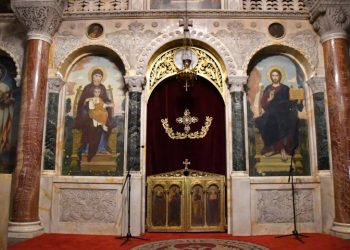
The St. Alexander Nevsky Cathedral in Sofia, Bulgaria, serves as a grand homage to the country’s freedom and spiritual legacy. Built from 1882 to 1912, the cathedral commemorates the 200,000 Russian soldiers who died in the Russo-Turkish War (1877–1878), a conflict that resulted in Bulgaria gaining independence from Ottoman control.
From an architectural perspective, the cathedral displays a Neo-Byzantine style, distinguished by its vast gold-plated central dome ascending to 45 meters and a towering bell tower soaring to 53 meters. The outside is decorated with detailed mosaics and decorative arches, whereas the inside showcases Italian marble, Brazilian onyx, and alabaster. Significantly, the crypt contains the Museum of Christian Art, which features one of the largest collections of Orthodox icons in Europe.
Covering an expanse of 3,170 square meters, the cathedral can hold as many as 10,000 guests, positioning it as one of the largest Eastern Orthodox cathedrals in the world. Its prime position in Alexander Nevsky Square provides convenient access for visitors discovering Sofia’s vibrant cultural scene.
Guests are invited to enjoy the cathedral’s peaceful atmosphere and investigate the crypt’s vast array of icons. The cathedral opens every day from 7:00 AM until 5:30 PM, while the Museum of Christian Art is open from 10:00 AM to 6:00 PM. An affordable entrance fee allows entry to the museum, providing greater understanding of Bulgaria’s religious art.
Essentially, the St. Alexander Nevsky Cathedral represents not just a symbol of Bulgaria’s historical endurance but also a testament to its vibrant architectural and spiritual heritage. A trip guarantees a deep understanding of the country’s history and cultural richness.

Go See the Roman Ruins of Serdica in Sophia, Bulgaria
Discovering the Roman Ruins of Serdica in Sofia, Bulgaria, provides an intriguing glimpse into the city’s historic origins. Located in the center of contemporary Sofia, these archaeological remains offer a concrete link to the city’s historical importance.
Historical Importance
Serdica, founded in the 1st century AD, prospered as an important Roman city because of its advantageous position on major trade pathways. Emperor Constantine the Great called Serdica “my Rome,” emphasizing its significance in the Roman Empire.
Archaeological Features
The Serdica Archaeological Complex includes numerous intact buildings that illustrate the city’s Roman history:
Fortification Walls and Gates: The Western Gate, an element of the city’s defense structure, highlights the architectural skills of Roman engineers.
Amphitheatre: Remains of a Roman amphitheater showcase the cultural and social events that previously engaged the people of Serdica.
Residential and Public Structures: Excavations have revealed streets, early Christian churches, baths, and residences, providing perspectives on everyday life in Roman times.
Guest Experience
The archaeological site is effortlessly blended into the cityscape, especially near the Serdika metro station. Visitors can freely explore parts of the ancient city, ensuring it remains an accessible attraction for everyone. Informative displays offer context and historical insights, enhancing the experience.
Utilitarian Details
Location: Central Sofia, close to the Serdika metro station.
Hours of Operation: Typically accessible to the public; certain areas may have set visiting hours.
Entry: Numerous sections are open for access without charge; certain exhibits or guided tours might necessitate a payment.


Visit The National Archaeological Museum in Sophia, Bulgaria
The National Archaeological Museum in Sofia, Bulgaria, provides an in-depth exploration of the region’s rich past, featuring relics from ancient eras to the Middle Ages. Founded in 1892, the museum occupies the historic Büyük Mosque, an important Ottoman building from the 15th century situated at 2 Saborna Street, in the city’s center.
Historical Importance
The museum’s placement inside the Büyük Mosque provides a distinctive historical context to its exhibits. Built circa 1474 during Sultan Mehmed II’s reign, the mosque is among Sofia’s oldest surviving structures, showcasing the city’s rich cultural and architectural history.
Showcases and Assemblies
The museum’s vast collections are arranged into various halls:
Prehistory Hall: Showcases objects from 1,600,000 BC to 1,600 BC, featuring tools, ceramics, and ceremonial artefacts from different prehistoric eras.
Treasury Hall: Displays notable treasures like the Valchitran and Lukovit Treasures, highlighting exquisite gold and silver craftsmanship from the late Bronze Age to late Antiquity.
Main Hall: Features a variety of artefacts from ancient Thrace, Greece, and Rome, up until the late Middle Ages.
Medieval Section: Showcases medieval literature, carvings, illustrations, and metal artefacts, emphasizing the area’s medieval heritage.
Significantly, the museum contains the oldest Bulgarian icon, a ceramic representation of St. Theodore from the 9th century.
Guest Information
The museum functions on a seasonal schedule:
Summer (May-October): Operating every day from 10:00 AM until 6:00 PM.
Winter (November-April): Available Tuesday through Sunday from 10:00 AM to 5:00 PM; closed on Mondays.
The museum provides complimentary entry for retirees on the second Thursday of each month and for all guests on the last Sunday of the month.
Final Thoughts
A trip to the National Archaeological Museum offers priceless understanding of Bulgaria’s profound historical and cultural development. Its central position and varied collections establish it as a vital spot for individuals interested in the area’s ancient and medieval heritage.


Visit the Regional History Museum in Sophia, Bulgaria
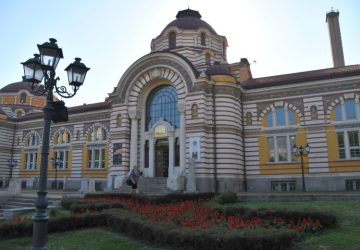
The Sofia Regional History Museum provides an in-depth look into the rich and varied history of the Bulgarian capital. Located at 1 Banski Square, the museum occupies the historic structure of the previous Central Mineral Baths, a notable building that harmoniously incorporates Vienna Secession style with classic Bulgarian, Byzantine, and Eastern Orthodox design features.
Founded to safeguard and showcase Sofia’s historical and cultural legacy, the museum’s main exhibition covers eight halls, with each one focusing on a particular period or element of the city’s evolution. Visitors can traverse through history, beginning in the Neolithic period (6th millennium B.C.) and moving forward to the 1940s, absorbing knowledge regarding the city’s evolution across thousands of years.
The museum boasts a vast collection of around 120,000 items, spanning fields like ethnography, archaeology, economic history, and the cultural life in Sofia and its surroundings. Key features consist of historical artefacts from the Roman era, illustrating the importance of the city as Serdica, along with displays that outline Sofia’s development during the Bulgarian National Revival and after liberation.
In addition to its permanent collections, the museum features numerous temporary exhibitions and cultural activities. Significantly, in March 2025, it showcased the 9th Annual Exhibition of the Society of Animalists, Florists, and Scientific Illustrators (SAFSI), highlighting creations from established and up-and-coming artists.
For individuals who cannot attend physically, the museum provides a virtual tour of its permanent collection, making it easier to discover its treasures online.
Whether you’re a history buff or an inquisitive traveler, the Sofia Regional History Museum offers a rewarding experience, shedding light on the city’s rich history in a significant architectural environment.

Do a Day Trip to Plovdiv from Sophia, Bulgaria
A day excursion from Sofia to Plovdiv, the second-largest city in Bulgaria, provides an intriguing exploration of history, art, and lively culture. Situated approximately 145 km southeast of Sofia, Plovdiv is conveniently reachable by train, bus, or car, making it an ideal day trip for those wanting to explore Bulgaria’s vibrant history.
Plovdiv ranks among Europe’s oldest cities that have been continuously inhabited, boasting a history spanning over 6,000 years. Its appeal is in the harmonious combination of historic ruins, 19th-century buildings, and modern artistic vibrancy. A highlight of the city is the Ancient Roman Theatre, which is exceptionally well-preserved and continues to host concerts and performances today. By strolling along its semi-circular stone steps, one can envision life in the Roman Empire in the 1st century AD.
A walk in Old Town Plovdiv feels like entering a time capsule. Paved roads guide visitors past vibrant Revival-period homes, galleries, museums, and charming craft stores. The Ethnographic Museum, located in a beautifully maintained 19th-century residence, provides an in-depth exploration of regional customs, artisan work, and legends.
For a contemporary atmosphere, visit the Kapana District—Plovdiv’s stylish artistic area. Featuring street art, independent shops, and lively cafés, it’s an ideal place to unwind with a coffee or savor a traditional Bulgarian lunch.
If time permits, explore Nebet Tepe, an ancient fort hill that provides sweeping views of the city and the nearby Rhodope Mountains.

Nightlife in Sofia, Bulgaria
The nightlife in Sofia, Bulgaria is lively, varied, and packed with surprises. Whether you seek a relaxed night with live jazz, a vibrant club atmosphere, or a snug bar for drinks and chatter, Sofia offers options for every preference and wallet.
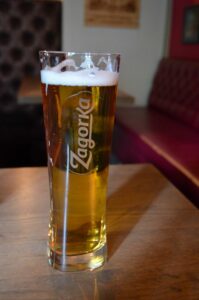
Begin your evening in the vibrant area of Lozenets or near Vitosha Boulevard, where fashionable bars and outdoor patios offer local wines, artisanal beers, and innovative cocktails. Numerous places in the city provide happy hour promotions, allowing for a night out without breaking the bank.
If you appreciate live music, Sofia boasts a vibrant scene. Venues such as Terminal 1 and Swingin’ Hall showcase local bands, DJs, and global performers, offering a diverse range of genres from rock and indie to electronic and jazz. For a more traditional experience, some mehanas (folk-style taverns) offer live Bulgarian music and dancing—a delightful way to engage with the local culture intimately.
For partygoers, Sofia lives up to expectations. Well-known nightclubs such as Yalta Club, PM Club, and Carrusel feature prominent local and global DJs playing house, techno, and pop tracks until the early morning. The celebration usually doesn’t begin until midnight, and it can continue long after sunrise.
Looking for something more peaceful? Visit a speakeasy-style cocktail bar like The Cocktail Bar or the rooftop bar at Sense Hotel, where you can enjoy breath-taking night-time views of the Alexander Nevsky Cathedral and the city skyline.
Sofia is quite pedestrian-friendly and secure during the night, facilitating easy movement between different places. Whether you’re dancing until dawn, sharing rakia with pals, or savoring a drink at sunset with mountain vistas, Sofia’s nightlife exudes a distinctive vibrancy that embodies the city’s youthful and artistic essence.
Festivals in Sofia, Bulgaria
Sofia, the capital of Bulgaria, bursts with energy all year round through a lively range of festivals that honor the city’s culture, music, film, cuisine, and art. No matter if you’re exploring in spring, summer, or even winter, it’s likely you’ll encounter a community event that unites people in cheerful festivity.
Sofia Music Weeks, taking place every spring, is one of the most awaited festivals. This globally recognized classical music festival attracts leading artists from Bulgaria and beyond, presenting concerts, operas, and chamber music in some of the city’s most stunning locations, such as the National Palace of Culture.
For cinema enthusiasts, the Sofia International Film Festival is a significant attraction. Taking place in March, it features Bulgarian and international films, along with screenings, workshops, and visits from directors and actors. It’s the top event for movie enthusiasts in the area.
In summer, the city’s parks and public areas turn into open-air venues with events such as the A to JazZ Festival, which presents world-class jazz performances at South Park in a laid-back, picnic-like setting. It’s complimentary, suitable for families, and an ideal way to enjoy a warm evening.
Sofia likewise organizes Sofia Bread Fest, honouring traditional baking and cultural heritage through interactive workshops and tasty samples. Gourmets will also appreciate the Balkan Street Food Festival, featuring regional cuisines from vibrant booths accompanied by live music and artisanal beer.
Art enthusiasts shouldn’t overlook NIGHT/Plovdiv x Sofia, a multi-day festival celebrating contemporary art and culture that illuminates the city through installations, performances, and gallery events.
Whether you enjoy music, cuisine, cinema, or traditions, Sofia’s festivals provide genuine cultural experiences that showcase the city’s artistic essence and friendly hospitality. Simply look at the calendar and immerse yourself in the celebrations—you may find something memorable.