



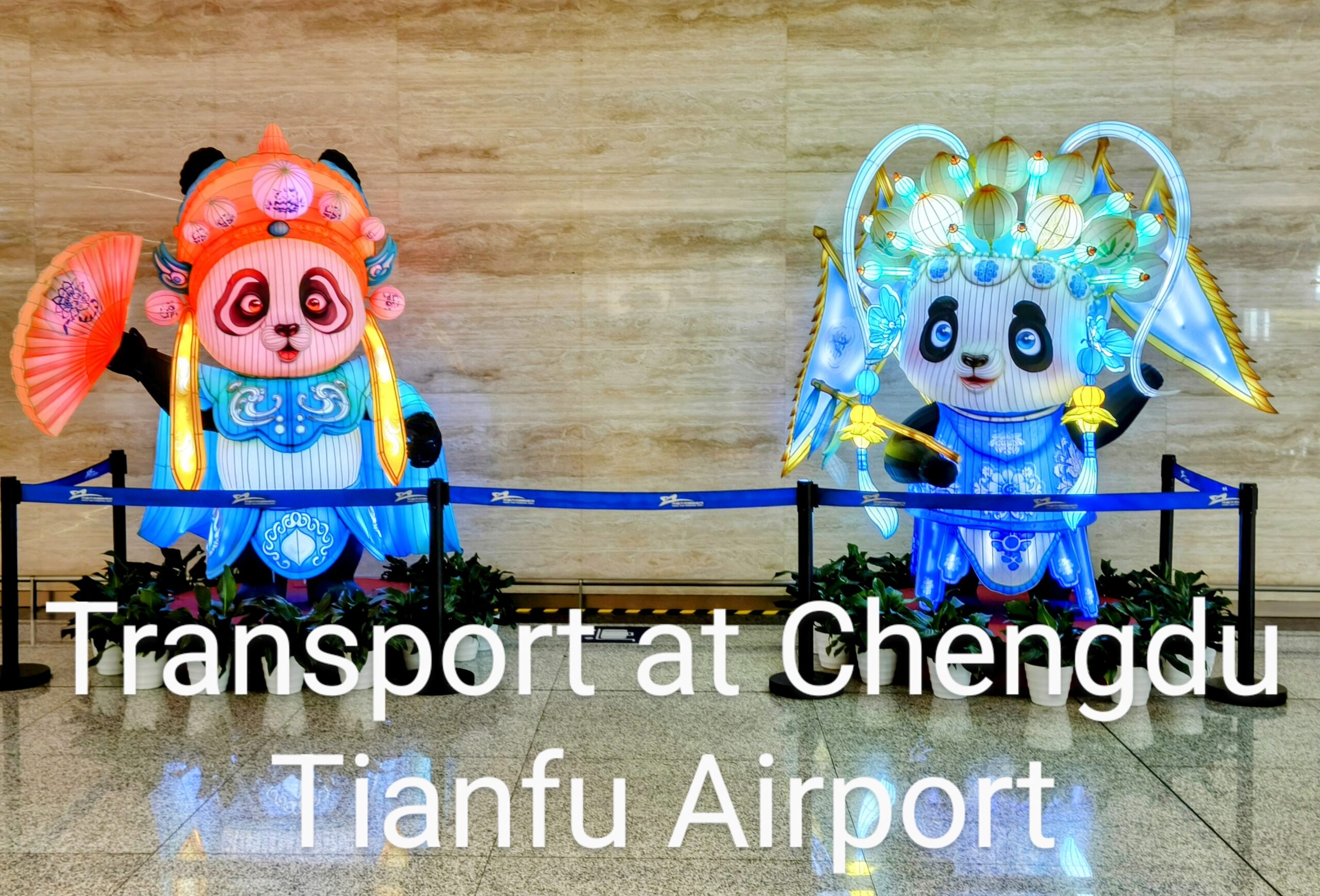
The experience of arriving at Chengdu Tianfu International Airport (TFU) is remarkably quick and modern, but there is one important factor to take into account: distance. TFU is a vast, cutting-edge facility that can easily accommodate millions of people. It is situated around 50 kilometres southeast of Chengdu’s city.
The airport’s bright, roomy terminals, with lots of natural light and clear information in both Chinese and English, will catch your attention as soon as you disembark. Thanks to well-run carousels and automated e-channels for qualified travellers, immigration and baggage claim are typically quick. You enter the roomy arrival halls of either Terminal 1 (international) or Terminal 2 (domestic) after retrieving your bags.
Your ground transportation into the city is the most crucial choice you must make. The Chengdu Metro Line 18, which goes straight to the airport, is the quickest and best choice. With a top speed of 140 km/h, trains may transport you to the city centre (South Railway Station or Tianfu Square via transfer) in around 45 to 60 minutes for less than CNY 15. Airport buses, which cost about CNY 40, depart often for several major hubs, including as Chunxi Road and the East Railway Station, for a more pleasant travel. Ride-hailing services (DiDi) and taxis are accessible around-the-clock, but the cost can range from CNY 120 to 200, and depending on traffic, the trip can take 50 minutes to more than an hour.
The older Shuangliu Airport (CTU) is much closer to central Chengdu than Tianfu, so keep that in mind. Always check your ticket to confirm the airport of departure. Metro Line 18 continues to be the most dependable option for most arrivals in terms of speed, affordability, and convenience, even if ride-hailing pickup zones are prominently designated.
-
Getting a Taxi at Chengdu Tianfu International Airport (TFU)
It’s easy to get a taxi at Chengdu Tianfu International Airport (TFU), but because the airport is around 50 to 60 kilometres from downtown Chengdu, travellers may expect a lengthier ride and more expensive charges. Official taxis are easily accessible around-the-clock from assigned ranks that are situated directly outside Terminal 1 and Terminal 2’s arrival halls. Once you’ve picked up your bags, follow the obvious “Taxi” banner.
There are two kinds of taxis that you will come across: metered and regulated new energy electric vehicles and ordinary automobiles. Including the first two kilometres, the base flag fall begins at roughly CNY 8 to 9. However, depending on traffic and time of day, the total fee to central locations like Tianfu Square or Chunxi Road usually ranges from CNY 120 to 200. Your total may increase by CNY 10 to 30 due to night surcharges (often after 11 PM) and tolls for using expressways.
Since many drivers don’t understand English well, make sure your destination is written in Chinese characters to ensure a seamless encounter. Hotel addresses are safer, but major landmarks such as “Chunxi Road” or “Chengdu South Railway Station” are understood. Cash, WeChat Pay, Alipay, and major credit cards are all accepted forms of payment. Verify your position in the app carefully because ride-hailing applications like DiDi operate from specific pickup zones, which are frequently somewhat different from taxi ranks.
Always wait at the proper rank and stay away from unofficial drivers offering rides within the terminal. Taxis provide door-to-door convenience, but Metro Line 18 is still much more affordable (around CNY 15) and frequently quicker during rush hour. The metro is a good option for most tourists on a tight budget, but the cab is your dependable workhorse if you have big luggage or arrive late at night.


2. Ride – Sharing Options at Chengdu Tianfu International Airport (TFU)
At Chengdu Tianfu International Airport (TFU), ride-sharing is a well-liked and practical substitute for taxis, with the Chinese super-app DiDi—the regional counterpart of Uber—dominating the market. DiDi is easily available through its own app or through mini-programs inside Alipay and WeChat, however foreign apps like Uber do not function in mainland China.
Once you have picked up your bags, proceed to the arrival hall and follow the purple “Ride-hailing” (đ约车) signage. Ride-sharing cars don’t wait at the curb like taxis do. Rather, you have to walk to special outside lanes or designated pick-up zones in the parking garages (P2 or P3 levels are typical). These areas are intended to avoid traffic mayhem and are prominently designated.
Price transparency is the main benefit. The average cost of a DiDi Express to downtown Chunxi Road is between CNY 100 and 160, which is marginally less than that of a metered taxi. DiDi Premier or six-seater XL variants are offered at a charge for bigger groups or heavy luggage. Prices might increase by 50% or more during peak times, such as late at night or on holidays.
A functional Chinese phone number and a linked payment mechanism (WeChat Pay or Alipay operate flawlessly; foreign credit cards may need to be set up) are prerequisites for using DiDi. Always confirm that you are in the designated ride-sharing area, even though the app uses GPS to automatically determine your pick-up location.
One important thing to keep in mind is that you should not take rides from drivers who approach you within the station and offer “private cars.” They don’t have a license. Make reservations via the DiDi app at all times. The Metro Line 18 is less expensive for first-time travellers, but DiDi is superior for door-to-door comfort.

3. Public Bus and Airport Bus Options at Chengdu Tianfu International Airport (TFU)
At Chengdu Tianfu International Airport (TFU), public buses and airport buses provide an affordable alternative to the pricey metro and pricey cabs. These coaches offer direct, pleasant links to important major hubs without going over budget, especially considering TFU’s rural location—about 50 kilometres from downtown.
Chengdu Shuangliu Airport Transport’s Airport Bus Line is the main service. There are a number of routes, but the most well-liked one connects TFU with Chunxi Road, the city’s primary retail area. Global Center (Century City) and Chengdu East Railway Station are connected by other lines. Fares are set and reasonably priced, usually between CNY 25 and 40 per person, which is far less expensive than a taxi (CNY 120–200) but a little slower.
Buses leave from well-defined stops outside Terminal 1 and Terminal 2’s arrival halls. Typically, services run every 30 to 60 minutes, though this varies depending on the route and time of day. Depending on traffic, the trip to downtown takes between sixty and ninety minutes. These air-conditioned, contemporary coaches have plenty of luggage storage downstairs, making them perfect for passengers carrying suitcases.
Compared to the older Shuangliu Airport, TFU has less options for public buses (typical city lines). Due to longer journey durations and fewer direct connections, local lines are rarely the best option for getting to central Chengdu. However, they do connect to neighbouring cities and transit hubs. Metro Line 18 or the specialized Airport Bus should be the first choice for most tourists.
Cash, China T-Union transit cards, or mobile codes (Alipay transport QR code) are all accepted forms of payment. When going during off-peak hours or avoiding metro connections, the airport buses are a dependable and comfortable option.


4. Renting a Car Options at Chengdu Tianfu International Airport (TFU)
For those wishing to explore Sichuan province outside of the city core, such as visits to Jiuzhaigou, Leshan Giant Buddha, or the Tibetan borders, renting a car at Chengdu Tianfu International Airport (TFU) offers the most freedom. But there are significant logistical and legal issues to take into account.
Both Terminal 1 and Terminal 2’s arrival halls have desks run by major domestic rental firms. China Auto Rental (CAR Inc.), eHi (Yihai), and (Shenzhou) are the most well-known. Although they are less popular, international brands like Hertz and Avis may be accessible through local agreements. An economical sedan costs between CNY 150 and 300 per day; SUVs and luxury cars cost more.
A valid passport, a Chinese driver’s license, or an International Driver’s Permit (IDP) in addition to your original foreign license are the essential requirements for international nationals. Be aware that China does not accept the IDP for non-residents under the Geneva Convention. The majority of foreigners are unable to lawfully rent a car without a Chinese license. Tourists are rarely granted short-term temporary driving permits at TFU. Make sure you are eligible before making a reservation.
The renting procedure is effective if you qualify. Vehicles are parked in the airport’s multi-level parking garages (P2 or P3), a short stroll from the desks, which are open throughout flight hours. The majority of rentals come with basic insurance, but pay close attention to the excess liability and collision damage waiver (CDW) clauses.
It’s simple to return the vehicle: simply follow the “Car Rental Return” signs that lead to the appropriate parking areas. To avoid refuelling surcharges, fill up the tank before returning. Although renting provides independence, be advised that you must have faith in Chinese traffic conditions due to Chengdu’s ring roads and high terrain. The metro and high-speed train continue to be easier choices for the majority of tourists.


5. Metro Train Options at Chengdu Tianfu International Airport (TFU)
At Chengdu Tianfu International Airport (TFU), the metro train is without a doubt the most efficient, affordable, and dependable mode of transportation. By connecting directly to the airport, Chengdu Metro Line 18 provides a quick, regular, air-conditioned service that avoids the cities infamous traffic jams.
Trains with designated luggage racks and roomy seating are part of Line 18, which was created especially for airport travellers. It takes about 45 to 60 minutes to get to downtown Chengdu from Terminal 1 and Terminal 2 stations, which are situated right beneath both terminals. You can transfer to Metro Lines 1, 7, and 16 for further connections to Chunxi Road, Tianfu Square, or other districts after the line ends at Chengdu South Railway Station (South Station).
The cost is the best feature. The cost of a one-way ticket to the city centre is about CNY 9 to 15, which is significantly less than the CNY 120–200 cab rate. During peak hours, trains operate every seven to ten minutes, while during off-peak hours, they run every ten to fifteen minutes. Although late-night visitors might miss the final train, regular operating hours are roughly 6:00 AM to 11:30 PM.
It’s easy to go to the metro: just follow the green “Metro” signs in the arrival hall after picking up your bags. Cash, UnionPay cards, WeChat Pay, and Alipay are accepted at ticket machines. Additionally, you can use a China T-Union transit card or utilize Alipay’s transport mini-program to scan a QR code.
Line 18 has two train types: Express (faster, fewer stops) and Regular. About ten minutes are saved with express trains. Verify which is arriving by looking at the platform’s display screens. Metro Line 18 is the obvious choice for the majority of travellers arriving at TFU because it is inexpensive, quick, and hassle-free. Just make sure your plane touches down before the final train leaves.